New Program Available!

Electrician Technician Program

Build the skills to power homes, businesses, and industries. Our hands-on program covers residential, commercial, and industrial electrical systems — from circuit theory to solar installation.

~10 Month Program
Hands-On Labs
Financial Aid Available*

Request Information!

Learn more about NWC and our programs.

Train for a Career in Electrical Technology

The Electrician Technician program at North-West College provides comprehensive training in electrical systems installation, maintenance, and repair. Students gain practical experience through extensive lab work alongside classroom instruction in electrical theory, code compliance, and safety standards.

From residential wiring to commercial installations and emerging solar technologies, this program prepares students with the technical foundation needed to pursue entry-level positions in the electrical trade.

Proudly accredited by

Program Offered at Our
What You’ll Learn

Comprehensive Curriculum

Our program covers the full spectrum of electrical technology — from foundational theory to advanced industrial systems and renewable energy.

Electrical Theory & Fundamentals

Build a strong foundation in voltage, current, resistance, Ohm’s Law, circuit behavior, transformers, motors, and the principles behind electrical power generation and distribution.

Learn More

Worksite Safety

Learn essential jobsite safety practices, OSHA 10 standards, CPR/BLS, tool use, blueprint reading, rigging basics, and safe procedures for working around electrical systems.

Learn More

Flexible Conduits and Cable Assemblies

Gain hands-on experience selecting, bending, and installing flexible conduits, cable assemblies, fittings, connectors, and raceways while applying NEC requirements.

Learn More

Introduction to Commercial Wiring

Learn how to read commercial electrical blueprints, identify materials and equipment, size circuits and feeders, and support safe commercial electrical installations.

Learn More

Low Voltage Wiring Systems

Train in the basics of telecommunications, alarm, security, and entertainment wiring systems, including cable selection, installation, termination, testing, and troubleshooting.

Learn More

Electric Motors and Industrial Control Systems

Study single-phase, three-phase, DC, and capacitor motors while learning how to install, control, troubleshoot, and maintain motor-driven systems.

Learn More

Programmable Logic Controls

Develop basic PLC skills by learning digital logic, semiconductor devices, numbering systems, controller hardware, programming functions, and troubleshooting methods.

Learn More

Photovoltaic Systems

Explore solar energy technology through hands-on training in PV system components, design, sizing, installation, wiring, grounding, safety, and NEC code compliance.

Learn More

Hands-On Training

Learn by Doing in Our Training Labs

Theory meets practice in our fully equipped electrical training labs. Students work with real-world equipment including electrical panels, conduit systems, motor controls, PLCs, and photovoltaic installations.

Wire residential and commercial circuits on training boards
Install and configure programmable logic controllers
Practice conduit bending, cable pulling, and terminations
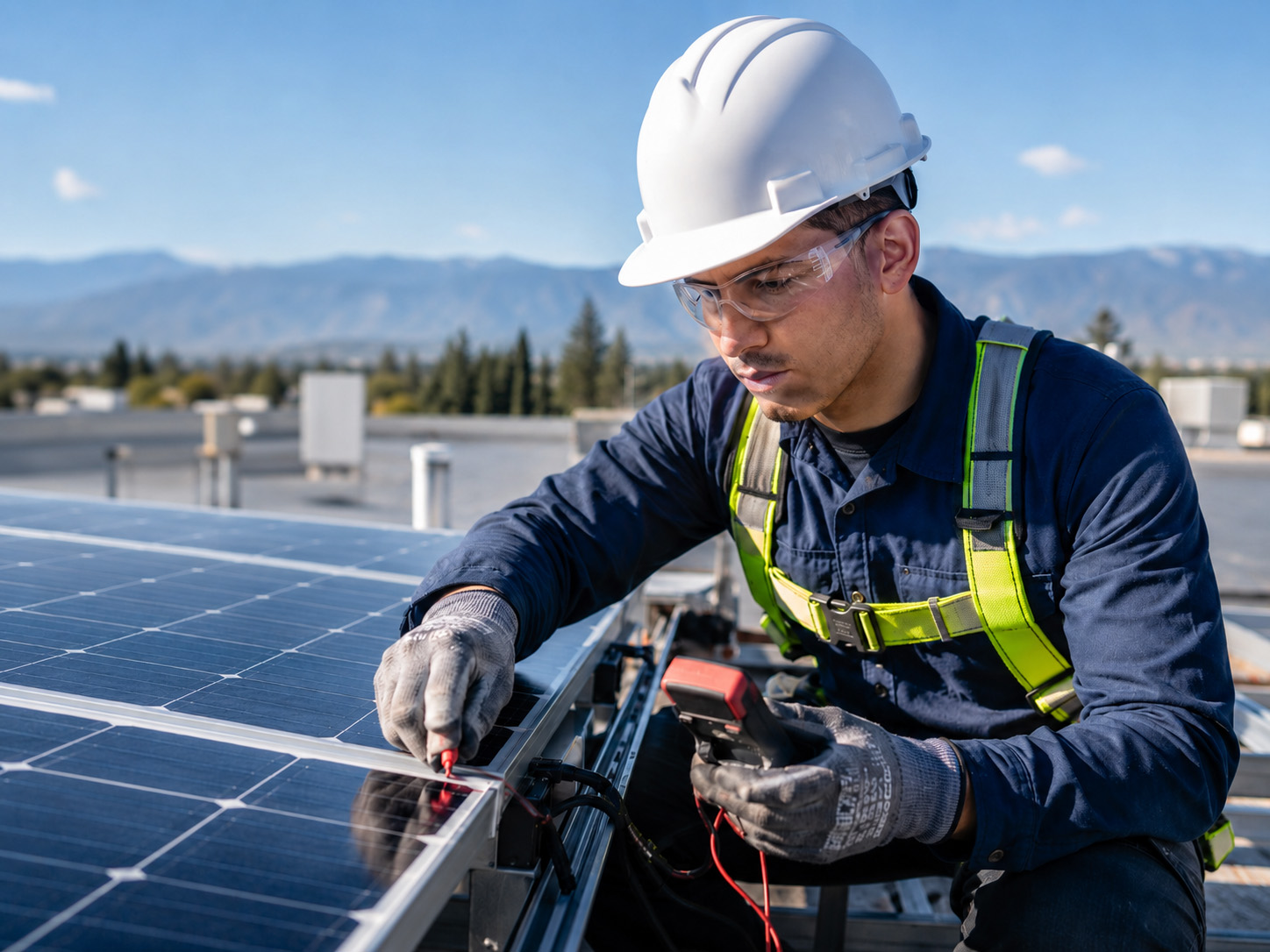
Work with solar panel systems and inverter connections
Use pro test equipment: multimeters, megohmmeters, clamp meters
Perform lockout/tagout and safety procedures
Career Opportunities

Pursue Entry-Level Electrical Careers

The electrical trade offers diverse career paths across residential, commercial, and industrial sectors. Graduates of this program may pursue entry-level opportunities in a growing field.

Electrician Helper

Electrical Apprentice

Maintenance Electrician

Solar Panel Installer

Low-Voltage Technician

Building Maintenance Tech

*Career outcomes vary by individual. North-West College does not guarantee employment or salary levels.
Class details

Learn More About the Classes You’ll be Taking

Electrical Theory & Fundamentals

Provides students with a foundational understanding of the principles that govern electrical systems and power distribution. The course explores key concepts such as electrical energy, voltage, current, resistance, Ohm’s Law, Kirchhoff’s Circuit Laws, and the behavior of capacitors, inductors, and transformers. Students learn how magnetic fields and electromagnetic induction contribute to the generation and distribution of electrical power. The course also introduces various motor types, including single-phase, three-phase, and capacitor motors, along with their applications and operation. By the end of the course, students will be able to interpret motor nameplate data, understand motor selection and performance, and perform basic motor diagnostics and troubleshooting.

Flexible Conduits and Cable Assemblies

Introduces students to the proper selection, installation, and code-compliant use of flexible conduits and cable assemblies commonly found in commercial electrical systems. The course focuses on National Electrical Code (NEC) requirements, including the use of approved conduit types, fittings, connectors, and raceways. Through hands-on lab activities, students gain practical experience installing metallic and non-metallic conduit systems while following industry safety standards. Students also develop essential conduit bending skills, learning how to create common bends such as offsets, 90-degree bends, and saddles used in field installations. By the end of the course, students will be able to install flexible conduit systems safely and accurately while applying NEC requirements to real-world electrical projects.

Low Voltage Wiring Systems

This course provides students with an introduction to the alarm, telecommunications, and entertainment electronics industries. The course covers the structure, function, and applications of low voltage systems, including the identification and use of various conductors and cable types. Students learn how to select, install, terminate, and test low voltage cabling while following industry standards and safety practices. Through hands-on training, students gain experience interpreting wiring diagrams, installing system components, and troubleshooting common issues. By the end of the course, students will have the foundational skills needed to work with telecommunications, security, and other low voltage wiring systems.

Programmable Logic Controls

Introduces students to the fundamentals of solid-state control systems and their role in modern electrical and industrial applications. The course explores semiconductor devices, digital logic components, and the principles behind automated control systems. Students gain hands-on experience working with programmable logic controllers (PLCs), including their hardware, software, and programming functions. Instruction also covers numbering systems such as binary, octal, decimal, and hexadecimal, which are commonly used in PLC programming and logic operations. By the end of the course, students will be able to develop, analyze, and troubleshoot basic PLC programs used in real-world industrial control environments.

Worksite Safety

This class introduces students to the essential safety practices and foundational skills required for electrical work environments. The course covers OSHA 10 regulations, NFPA 70 electrical safety requirements, Basic Life Support (BLS) and CPR, and safe work practices for servicing electrically energized systems. Students also learn measurement techniques, basic math calculations, blueprint reading, rigging fundamentals, and the proper use of hand and power tools. Through a combination of lecture and lab activities, students develop the knowledge needed to maintain a safe and productive jobsite. By the end of the course, students will be prepared to work safely around live electrical installations while following industry safety standards and emergency response procedures.

Introduction to Commercial Wiring

Provides students with a foundation in commercial electrical installation practices and three-phase power distribution systems. The course teaches students how to read and interpret commercial electrical blueprints, identify wiring materials and equipment, and understand the layout of commercial electrical systems. Emphasis is placed on applying National Electrical Code (NEC) requirements to calculate and size service entrances, feeders, and branch circuits. Students also learn basic maintenance and troubleshooting techniques used to ensure the safe and reliable operation of commercial electrical systems. By the end of the course, students will have the knowledge and practical skills needed to support commercial electrical installations in accordance with industry standards and code requirements.

Electric Motors and Industrial Control Systems

Introduces students to the operation, application, and control of electric motors commonly used in industrial and commercial environments. The course covers single-phase, three-phase, capacitor start/run, and direct current (DC) motors, with an emphasis on interpreting motor nameplate data for installation, operation, and troubleshooting. Students learn the fundamentals of motor control systems, progressing from basic control circuits to more advanced configurations using relays, contactors, timers, and switches. Hands-on activities provide experience integrating sensors such as pressure and temperature controls into motor-driven systems. By the end of the course, students will be able to analyze, troubleshoot, and manage motor control systems while applying industry safety standards and National Electrical Code (NEC) requirements.

Photovoltaic Systems

Introduces students to the fundamentals of solar energy and photovoltaic (PV) technology used in residential and commercial applications. Through classroom instruction and hands-on lab activities, students learn how solar energy is converted into electrical power and explore the components that make up a PV system, including modules, inverters, and charge controllers. The course emphasizes system design, sizing, installation, wiring, grounding, and safety practices. Students also learn to apply National Electrical Code (NEC) requirements related to solar electric systems to ensure safe and code-compliant installations. By the end of the course, students will have the knowledge and practical skills needed to design, install, and evaluate basic photovoltaic systems.

Electrician Technician Program Frequently Asked Questions (FAQs)

Electrician Technicians install, maintain, troubleshoot, and repair electrical systems in residential, commercial, and industrial settings. They work with wiring, electrical panels, motors, lighting systems, control systems, and other electrical equipment.

Students learn electrical theory, residential and commercial wiring, electrical safety, blueprint reading, motor controls, low-voltage systems, programmable logic controllers (PLCs), photovoltaic (solar) systems, and troubleshooting techniques. The program combines classroom instruction with hands-on training.

Yes. Students participate in hands-on lab activities designed to reinforce classroom concepts and develop practical skills used in the electrical industry.

No. The program is designed for beginners and does not require previous electrical training or experience.

Yes. The program incorporates NEC requirements throughout the curriculum to help students understand code-compliant installation practices and industry standards.

Students receive training in electrical safety, OSHA regulations, NFPA 70 standards, jobsite safety practices, and Basic Life Support (BLS)/CPR.

Yes. Students learn residential branch circuit design, load calculations, grounding methods, and the installation of wiring systems, receptacles, lighting outlets, and protective devices such as GFCIs and AFCIs.

Yes. Students learn commercial wiring methods, three-phase power systems, conduit installation, service calculations, blueprint reading, and commercial electrical maintenance practices.

Yes. Students study single-phase, three-phase, capacitor start/run, and DC motors, as well as motor control circuits, relays, contactors, timers, and sensors.

Yes. Students receive an introduction to photovoltaic (PV) systems, including solar energy principles, system design, installation practices, wiring, grounding, and applicable code requirements.

Graduates may pursue entry-level opportunities such as Electrician Technician, Electrical Installer, Electrical Maintenance Technician, Low-Voltage Technician, Solar Installer, Industrial Maintenance Technician, or Electrical Apprentice.

Graduates will have foundational knowledge of electrical theory, wiring methods, motor controls, low-voltage systems, PLCs, solar technologies, troubleshooting, blueprint reading, code compliance, and workplace safety, preparing them for entry-level employment in the electrical industry.

Request Information

Fill out a short online form and one of our Admissions Representatives will reach out and answer all of your questions.

Apply Online Now!

Ready to make your decision? You can apply online now in less than a few minutes.

Schedule a Tour

Come and see us in person! Talk to your future instructors, meet your future classmates and get familiar with your new home.